PRESS RELEASE - Caselberg Trust International Poetry Prize 2012 - Winners Announced
READ THE WINNING POETRY HERE Caselberg Trust International Poetry Prize Winners 2012
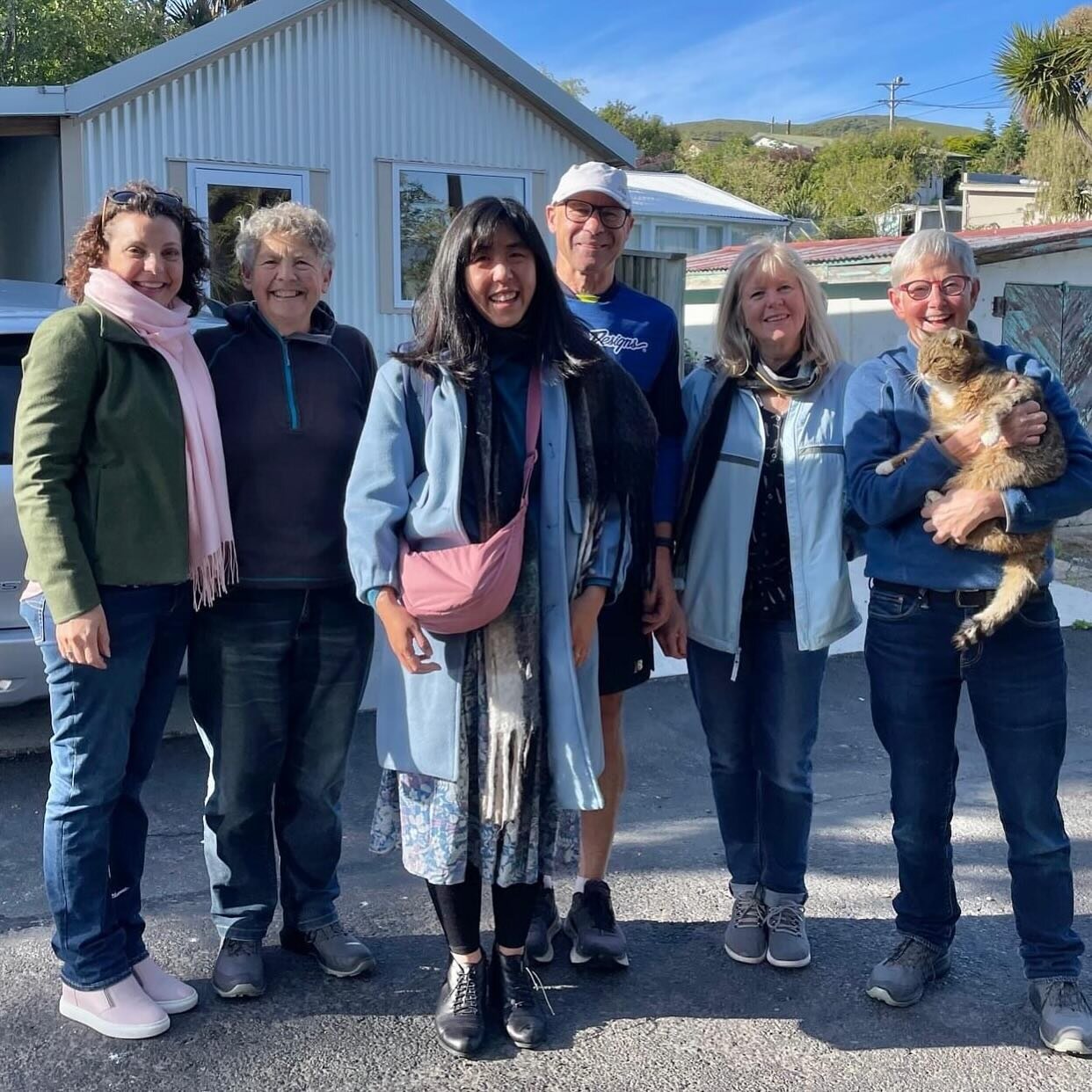
Lynn Taylor, Artist, Caselberg Retreat down the Bay Resident 21st-28th January 2012
Book Binding Workshop with Lynn Taylor 29 Jan 2012
Caselberg Trust announces Creative Connections resident 2012
Dunedin's Caselberg Trust announces new Creative Connections residency
The winners of the Caselberg Trust International Poetry Prize for 2011 have been announced
The winners of the 2012 Caselberg Trust International Poetry Prize have been announced. This year's competition was judged by Wellington poet James Brown.
First place went to 'All the Things I never knew', by Tim Upperton of Palmerston North, and 'The Tithonus Doll', by Micah Timona Ferris, of Christchurch was placed second. The winners receive $500 and $250 respectively, and their entries will be published in May in Landfall 223.
The five Highly Commended entries came from Therese Lloyd (Paekakariki), Natasha Dennerstein (Wellington), Mary Cresswell (Paraparaumu), Cliff Fell (Motueka), and Carolyn McCurdie (Dunedin). Their poems, along with the two winning entries, will be published on the Caselberg Trust website during May (www.caselbergtrust.org) .
The second annual Caselberg Trust competition, which was again judged blind, attracted nearly 200 entries from around New Zealand and overseas. James Brown, in his report, said that the winning poem 'makes excellent use of rhyme and rhythm to mimic popular song, and the moments when the lines disrupt the expected rhythm are perhaps even stronger. An aging Bobbie Gentry strumming her former hit is a perfect image of nostalgia...'
The judge praised 'The Tithonus doll' as 'a fine lyric poem' in which the unrequited love felt by a ventriloquist's doll for her master was 'beautifully rendered'.
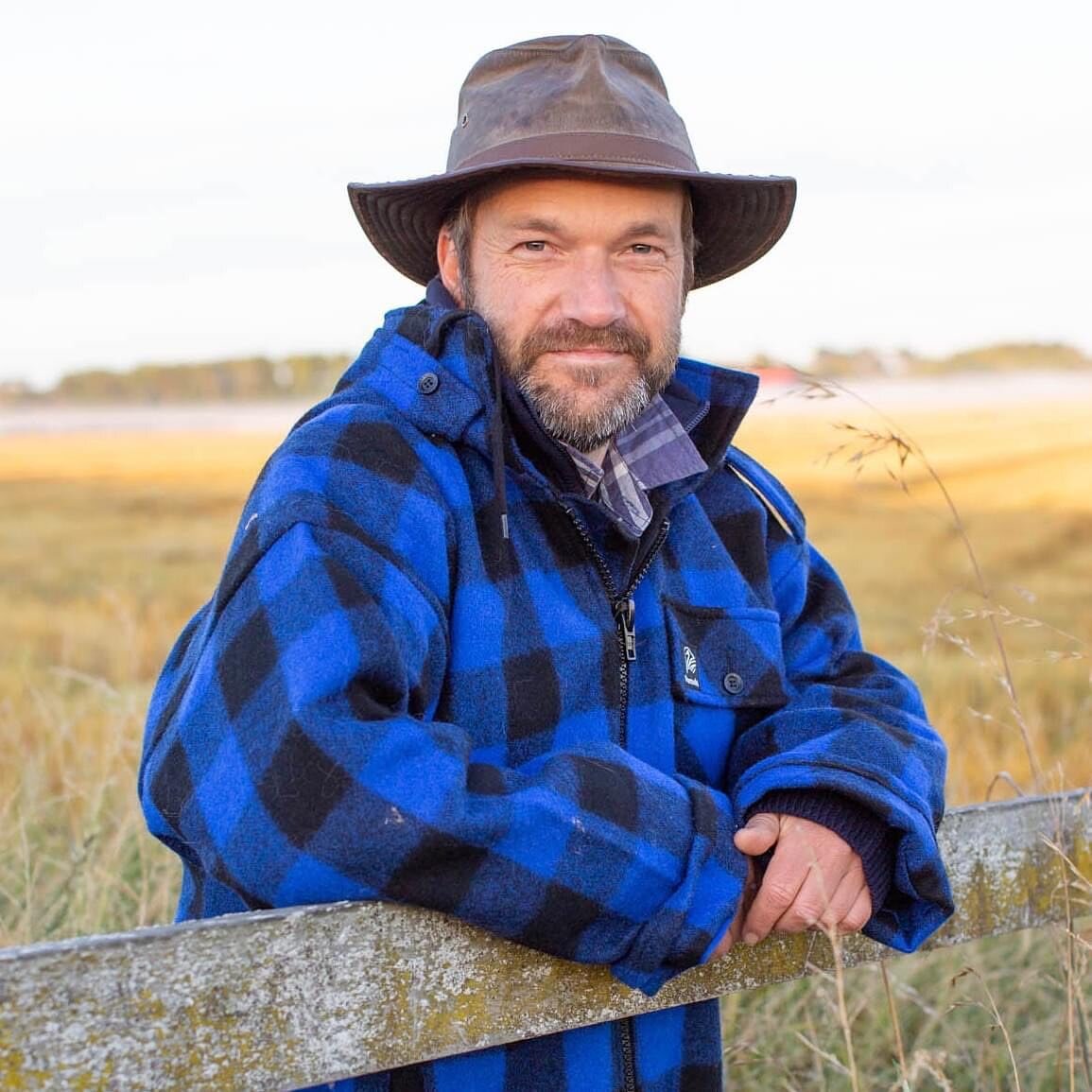
James Brown is himself an award-winning poet, editor, and writer of short fiction. His latest collection of poems will be published by Victoria University Press in July this year.
Tim Upperton's poems have appeared in many New Zealand and American literary magazines and in various anthologies, including Best New Zealand Poems. His first collection of poems, A House on Fire was published by Steele Roberts in 2009. He also reviews for the Dominion Post and the Listener.
Micah Timona Ferris, born in Switzerland with dual Swiss and New Zealand citizenship, has a BA from the University of Canterbury and an MA from Victoria University. In 2011 she won the Macmillan Brown Prize for Writers and her poetry and short fiction have been published in various NZ and international journals.
In addition to fostering writers and artists in a variety of ways, the Caselberg Trust operates an artist residence at Broad Bay on the Otago Peninsula. The Trust's inaugural 'Creative Connections' residency is currently held by the Featherston artist Megan Jane Campbell.
Contacts for further information:
For the Caselberg Trust
Alan Roddick - email: alan.roddick@clear.net.nz
Tim Upperton - email: tim.upperton@gmail.com
Micah Ferris - email: micah.timona@gmail.com
James Brown writes:
While reading the entries for the 2012 Caselberg Poetry Prize, I was also reading a book of aphorisms by Scottish poet Don Paterson called The Book of Shadows. One kept nagging me: 'Mediocre art is far worse than bad art. Bad art does not waste our time.' Certainly the more competent a poem, the more time I had to spend comparing it to poems of similar quality, but I didn't find the exercise a waste of time. Having to make a case for your value judgements brings the background mutters of your predilections and prejudices into the open, and being forced to confront them is no bad thing. Plus, the art I was teasing out was good.
I went to another Paterson aphorism: 'A poem is a little machine for remembering itself.' What I wanted was the poem that most stayed with me.
'All the things I never knew' looks back to the speaker's childhood, but, more than details, it gives us a soundtrack. The poem isn't just an ode to Bobby Gentry's hit, but also to '70s commercial radio and its penchant for the sentimental (think the mournful saxophone in Gerry Rafferty's 'Baker Street' as the exemplifying emotion). So the poem traverses dangerous territory: as Brian Turner says: 'Sentiment's okay, to a degree, sentimentality or sop are not.' Like Bill Manhire's 'My Sunshine', 'All the things I never knew' makes excellent use of rhyme and rhythm to mimic popular song, and the moments when the lines disrupt the expected rhythm are perhaps even stronger. An aging Bobby Gentry strumming her former hit is a perfect image of nostalgia, while the poem's constantly falling cadences serve up a gentle melancholia that evokes, in the speaker and ourselves, all that might have been but perhaps never was.
'The Tithonus doll' is also a fine lyric poem. The unrequited love the doll Elizabeth feels for the ventriloquist but cannot communicate to him is beautifully rendered. In Greek mythology, Tithonus (a mortal male pursued by the Goddess Eos) was granted eternal life but not eternal youth. The poem reverses this: the (female) doll has eternal youth but is not alive.
Poetry, too, desires to voice the unvoiceable and to live forever. Every time we read or recall a poem the 'little machine for remembering itself' ticks over. Long may it continue.
TIM UPPERTON
Palmerston North
In '67 there was Ode To Billie Joe
and big-haired Bobbie Gentry.
In my town that was 1970.
Bobbie on my transistor radio:
she was Mississippi Delta sultry.
Bobbie put the cunt in country.
The first record I ever owned,
and I wore out its little groove.
Bobbie watches headlights move
across the wall.
A little rain begins to fall -
a little rain to end the day.
It falls differently in LA.
Choctaw Ridge is far away.
Bobbie's bouffant hair's gone white.
She sits out on her porch tonight
with her guitar. Her voice is scratchy,
and she's feeling kind of low.
She's singing Ode To Billie Joe.
I'd like to phone her, just to know
whatever it was the lovers threw
from off the Tallahatchie
Bridge. The bridge collapsed in '72.
All the things I never knew.
MICAH TIMONA FERRIS
Christchurch
The ventriloquist clips his hands around her waist,
as if to hold her there. Her voice could coax
this man into a heady corner, but her ache hangs
in the air like heavy silk, her tired eyelids
only half regard him. Oh Elizabeth!
she wants him to say. To hold her chin, demurely
like he would a lady.
Tonight again, audiences will throw rosebuds.
For twelve years she has willed her own to grow
but each night he unbuttons the back of her dress,
slips her limp body out with careful fingers.
Sometimes he may hold her hips, look at her kindly
for a moment and she will try with all her might to speak.
THERESE LLOYD
Paekakariki
The talk these days is of all things known
and the arrangements we've made of them
Yes it's everything to be under this sun
We move in circles surrounded by ourselves
and the memories we've been gathering
quietly
Now we recollect times
when things were better
and worse.
Facts. The seasons fall one over the other
and then there is snow.
We are what the winter took
and summer gave back -
slightly changed by the slow settlement
that wears the bigger pieces down
to more manageable sizes -
but still collecting memories
and alive to the simple generosity
of that saucer of rainwater
sending up light to the ceiling.
NATASHA DENNERSTEIN
Wellington
I pierce my own ears with an Anzac
Day badge in the back of the Social
Studies class, hiding behind the fat
chick who mortifies her flesh
with chocolate eclairs. I understand,
but am skinny myself.
I deliberately fit out of cliques.
They like Abba; I go for Punk:
it's my aesthetic. I scour the Old
Testament for Tamar, the fallen
woman by the side of the road.
I read and revere The French
Lieutenant's Woman: the cape, the Cobb,
the-staring-out-to-sea. I am fifteen.
MARY CRESSWELL
Paraparaumu
[A glosa]
The world is fragile, old and very small.
We're shrunk to dolls, our rhetoric's a mutter.
I follow syllable by syllable:
the goldenrod sheds pollen in the butter.
Rachel Hadas, Pantoum on Pumpkin Hill
The show kicks off with a mile-high solar disc
dangling rows of superstars, buffed
larger than life and nearly twice as tall.
Banners of light shriek into the sky
and disintegrate into nothing much. Like me,
the world is fragile, old and very small,
scraping below the sawdust to spot the magic
to keep the Big Top sane.
Outside the tent, candyfloss and puppets
yank us to one side, but we yank back.
We march bravely, resolutely forward.
We're shrunk to dolls, our rhetoric's a mutter.
Once upon a time we held hands and wept
as we choked in rubble.
Broken statues leave us little more to glean.
I cover my head and follow in the field
where words have died a slow and painful death.
I follow syllable by syllable.
Green weeds rise and encroach the square;
goats scoff down grass and chinaberries;
the smaller rats begin to eat each other.
Across the hardscrabble yard
I write about the last glass vase of flowers.
The goldenrod sheds pollen in the butter.
CLIFF FELL
Motueka
Once when I was living in Florence
cycling home in the early hours
I heard an owl high in a campanile
and took a wrong turn down a wooden ramp,
an excavation in the Piazza Signoria-
and found I was in the city beneath the city
cycling between small ancient houses,
through alleys vaulted by the world of light
and the paving stones I knew. They say we go
into the ground to know where Death
will take us, but I had entered this other world
in lively wonder - for I was in love with poetry
and the spectral light it casts over
the past and present and perhaps even the future,
though it is hard to say for sure what light
poems will cast over the time that is to come
or even that they will survive. I only knew and cared
that I was alive in the catacombs and tumble
of a lost city, and that what I thought an alley
was really a thoroughfare leading to the river
between small shop fronts such as you might find
in cities like Herat or the Byculla backstreets
of Bombay - Mumbai as we now say.
I had to dismount to push the bike and it seemed
I must have been heading somewhere beneath the Uffizzi
for I had come to the waterside, though still
on a stratum below the world - I could hear
cars moving above me on the via Lungarno,
the swish of their tyres on the rainy street,
close to the corner of the Pontevecchio
where Dante once waited, alone and forlorn,
hoping to catch a glimpse of Beatrice,
as the pall-bearers carried her to the tomb.
Nothing ever happens twice, and yet as I stood
in the must and dank of that excavation,
in what must have once been the Etruscan city,
I felt those old stones tense up, as though they could sense
the poet in the shadows, waiting for the cortege
to pass him once more, and again and again and again.
CAROLYN McCURDIE
Dunedin
I walk
down the street with rectangular
eyes.
Naked tree branches break
glass and stone
to diminishing pieces,
hold them aloft. They sway,
they fit
in delicate miracle.
Outside a café two men
are laughing, ease back
at the waist; the light leans
towards them; the road curves
away. They are beautiful,
beautiful.
Here,
in the parking building,
quiet.
Lines of white concrete pillars
measure white space, clear room
on the floor for
long parallelograms
of sun that promise
to move. But not yet.
Under-lit, bubbles
of metal hover
in patterns
of broken uniformity.
I open one up and
drive it away.
When: Sunday 29th April 2012
Time: 9.00am - 4.30pm
Venue: Art Workshop Studio, Broad Bay, Dunedin
Park: Fletcher Challenge House car park, Portobello Road, Broad Bay
Meet: 9.00am - 7 Frances Street, Broad Bay
Cost: $120.00 ($100.00 for Caselberg Trust members)
(includes morning and afternoon tea/coffee, bring own lunch)
MAX number 10
Paddy Richardson is a widely published author and an experienced teacher of creative writing. She has had numerous short stories read on National Radio and published in journals both in New Zealand and overseas, has published two collections of short stories and four novels. Paddy was the University of Otago Burns fellow in 1997 and has subsequently been awarded a Creative New Zealand grant, a Beatson fellowship and a University of Otago James Wallace Arts residency. She has taught creative writing courses at summer schools, community evening classes, Otago Polytechnic and teaches story writing in the University of Otago Science and Communication programme. This year she has been invited by Penguin New Zealand to attend and read at the Leipzig Bookfest.
The aim for this workshop is to create a friendly and supportive environment where both beginning and experienced writers will feel confident in sharing their ideas and work. Participants will be guided through exercises related to the major elements used to create both long and short fiction- character, setting and plot. Paddy will also cover other areas of fiction writing such as beginnings, dialogue and imagery.
Lynn Taylor will have the results of the weeks residency on display as well as some of the book samples which will also be shown at the book binding workshop the following day... there will be an etching press set up (outside in the garden if a sunny day) and some inks and paper etc available so people can come and have a go at making a print (free).
Address: 8 Gwyn Street, Broad Bay
No Parking outside the house - please park in the Fletcher Challenge Car Park, off Portobello Rd, immediately after Frances Street - 2 minute walk to the house.
Lynn will be beginning a new project based around St Kilda in Dunedin and will focus the week on working with a recipe book that was published in the St Kilda community some years ago. The St Kilda project concept has been instigated by UK artist Deirdre Nelson who is proposing to investigate and respond to St Kilda's in Scotland, Dunedin and Melbourne. Author Christos Tsiolkas is the Melbourne link and sometime in 2012 Deidre hopes to travel to visit both locations and see where working collaboratively takes the creative output. Lynn very much hopes that people from the public with stories or photos about St Kilda could come and share them with her through the residency.
When: Sunday 29th January 2012
Time: 10.00am - 4:00 pm
Venue: Art Workshops Studio, Broad Bay, Dunedin
Park: Fletcher Challenge House car park, Portobello Rd, Broad Bay.
Meet: 10.00am. 7, Frances Street, Broad Bay
Cost: $120.00 ($100.00 for Caselberg Trust members) (bring your own lunch)
The Caselberg Trust announced today that its inaugural Creative Connections resident in 2012 will be Wairarapa artist Megan Jane Campbell.
Ms Campbell is a painter, and was a finalist in both the 2009 and 2011 Wallace Art Awards, a finalist in the 2011 Waikato Contemporary art awards, and also recently had worked published in Gregory O'Brien's Back and Beyond, Art for the young and curious, which won the 2009 non-fiction award in the 2009 New Zealand Post Book Award for children and young adults.
The Trust was looking specifically for projects that reach out, and make links, across a variety of creative media, professional disciplines, and/or to communities relevant to the planned project.
Ms Campbell will spend 3 months at the Caselberg house in the earlier half of 2012, and will be working on 2 specific projects as part of her residency.
The first relates to her strong family connections to the city of Dunedin, where both of her parents Jean and Alex, grew up and lived until their early 20's. Ms Campbell's mother, who recently died one month short of her 90th birthday, was brought up in Caversham. In 2010 Ms Campbell undertook a road trip to Dunedin with her mother, where they revisited her earlier life.
Ms Campbell states “She told me that most of her dreams were now located in that early time in Dunedin, and her meeting with my father Alex. I intend to chronicle and record my mothers early life”.
The second part of Ms Campbell's Creative Connections project relates to her professional training in mental health, and her fascination with old institutional buildings. In the past she has painted “Fire at Seacliff” and “Nurses home at Seacliff”, and so she is planning to spend time visiting the old Seacliff Hospital site to research and collate data for a new series of work.
Creative Connections selection panel Chairperson, Robert West said “We were delighted with the range and quality of applications we received in this first year, and are very happy that Megan will be our inaugural Creative Connections resident in 2012”
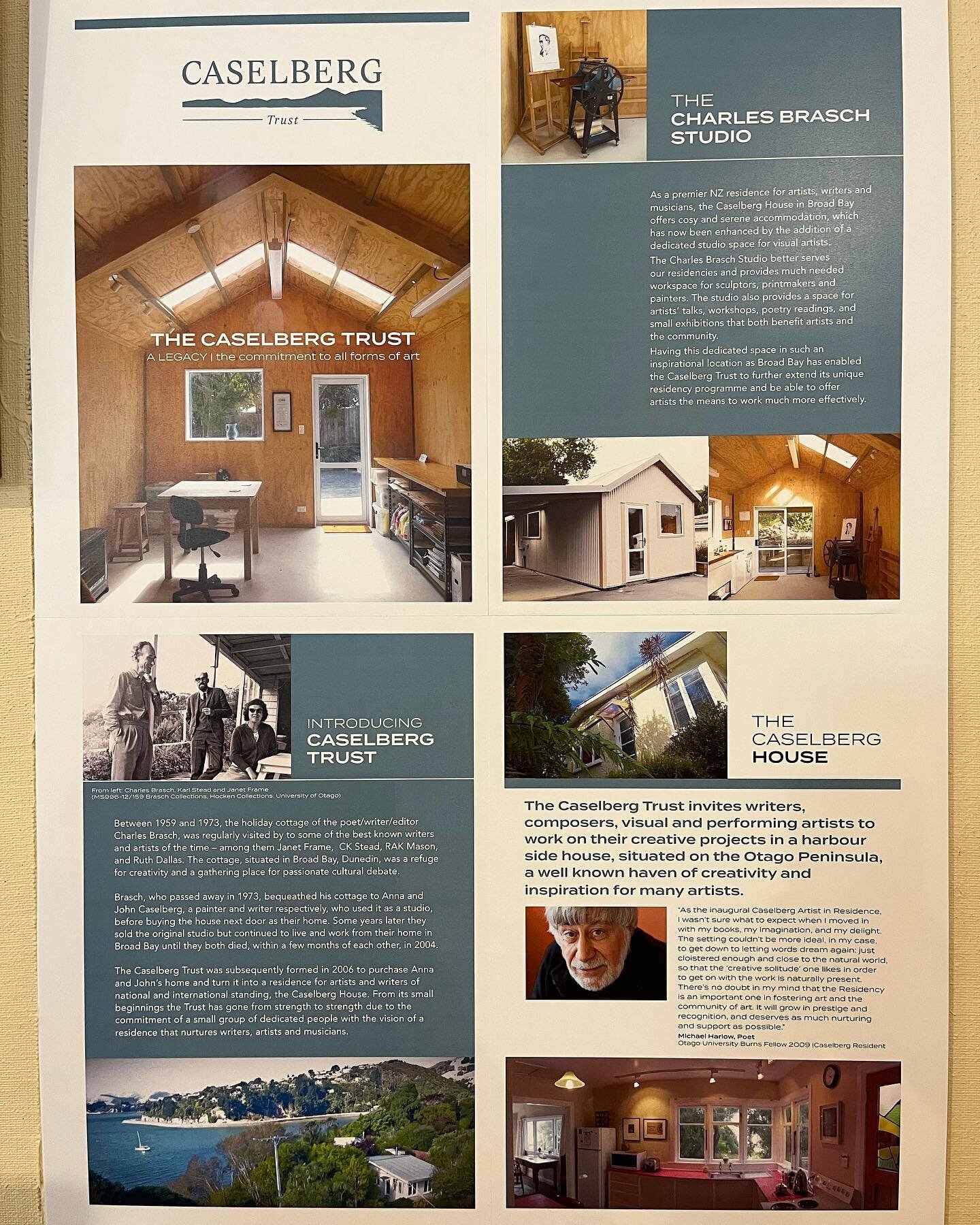
The Caselberg Trust purchased the Broad Bay, Dunedin home of the late John and Anna Caselberg in 2006, with the aim of hosting creative residencies in the house. Since inception, the Trust has held a variety of creative projects and events, as well as hosting a number of well-known New Zealand writers and artists at the cottage. In May 2011 the Trust announced it was hosting 2 Christchurch writers, whose homes had been destroyed by the February 2011 earthquake.
Applications for the 2013 Creative connections will open later in 2012.
A warm Dunedin welcome was given to writer Anna Smith by the Caselberg Trust and local artists, writers and friends at the Art Workshop Studio, Broad Bay last week.
Anna's day job is teaching children's literature at the University of Canterbury. She has found the first month of a 3 month stay in Broad Bay a wonderful opportunity to concentrate on her fiction which took a serious dive following the earthquakes in Christchurch. Currently she is working on a number of short stories that need editing; she has also begun a larger piece of work that she feels very positive about. After the serious disruptions in Christchurch, she is finding the Caselberg House a wonderful retreat in which to write and be creative.
Related article: Cottage a haven of peace for Christchurch Artists
The Caselberg Trust announced today it would be funding a new Creative Connections residency at its cottage in Broad Bay, Dunedin. The residency of between 3 and 6 months will pay a stipend of $6000 for the successful applicant.
Creative Connections will be unique within New Zealand, as it will be open to people from a wide variety of creative arts and non-arts backgrounds, who can engage in a creative project and collaborate with creative media, and communities relevant to their project.
Bernadette Hall writes:
It's an odd expression isn't it, to be the 'judge' of a poetry competition. I've spent a lot of time over the last months, reading and rereading the 237 poems entered in this year's Caselberg Poetry Competition and frankly, I'm reluctant to admit that I've 'judged' anything. Not in the sense of putting on a black cap and banging away with a gavel, you pass, you fail, off to the colonies, off with your head.
I've decided I'd rather be called a chooser. It's as if I've been invited into a series of small rooms, 237 of them, and it's up to me to choose the ones in which I'd like to set up house for a while.
Some rooms are plush, some are spare; some are draped in funereal black; some are like confessional boxes; in others people and creatures, rivers and trees dance and sing even though the walls are a bit wonky and there's an odd knocking in the antiquated plumbing. My favourite rooms, a whole clutch of them, are fresh and surprising. They're well built, there's flair and imaginative energy in their making. The world looks replenished through their windows.
To be highly commended in a competition like this is no mean feat. I want to congratulate the five poets who find themselves in this position and thank them for the depth, excellence and freshness of their work. As for the two rooms that I finally decided to set up house in, they were in a word, irresistible. Here is some of my thinking.
'After Reading Auden' by Mary McCallum is ambitious. It hooks itself into a literary context. Where Auden's sun is 'incurious', this poem is full of curiosity: about the river, the light, the landscape. There's story and memory here, and best of all, a patient, deepening re-creation of experience, what it feels like to be, for a moment or two, truly alive.
'home to you' by Michele Amas, is wicked, there's no doubt about that. It's also elegant and quick and clever. You have to be alert as you're jumped from line to line. Above all it's an audacious love poem, circling, gathering, exploding in that unforgettable last line.
Congratulations to the Caselberg Trust. You've teased out a lively and interesting run of new work and that has to be good for NZ poetry.
by Mary McCallum
The river we swim
fresh from the horses, under
the sun he calls 'incurious',
becomes a man's body reclining –
its current, muscular,
its translucent depths, flesh.
And we are in deep, held tight
at the shoulders, hips, wrists,
wrapped by arms yielding and
not yielding.
From the very first coming down
into the new valley, we felt the force
of the river's intimacy, its deep
soundless need – not sour,
not shiftless, but lucid, expressive,
sweet. The leaping light from the cliffs,
the unexpected greenness of trees,
the harrier on thermal air, broom pods
popping in the heat, and we, the girls and I,
dissolving.
At last, we pull away, God knows how,
and climb up through the truffle-dark
horses and yellow broom to the hill-top,
and we pause there and look
back at the river stretching its limbs,
arching its back, its mouth
a soundless 'o' of green ecstasy.
And slowly,
so slowly, limb by limb,
we dry the water from our faithless skin.
The Caselberg Trust is happy to announce that their artists and writers residence at Broad Bay, is to be made available to two Christchurch writers, whose work spaces have been badly affected by the recent Christchurch earthquakes.
The small cosy cottage overlooking Otago Harbour is a peaceful creative oasis, and the perfect antidote to the stress and concerns facing artists trying to work in a city that has suffered great loss and where lives continue to be disrupted.
Caselberg Trust Chairperson Dr Janet Downs said "The Caselberg Trustees felt very strongly that we needed to support Christchurch writers and artists, by making the cottage available to those displaced in the recent earthquakes".
Having put the word out around artistic networks in Christchurch, the Trust selected two writers 'in need'; Halina Ogonowska-Coates of Sumner and Anna Smith of Lyttelton. Both writers have been granted 3 months 'residence' rent free at the Broad Bay cottage during the remainder of 2011, and Ms Ogonowska-Coates will be moving into her Dunedin home and work space later this month.
Halina Ogonowska-Coates is a writer, film maker, broadcaster and oral historian. She says of her current situation … 'I have always worked from a studio at my home in Sumner. Unfortunately my home is on a cliff and has been made uninhabitable, due to rock fall, by the February earthquake. I am homeless at the moment and staying with friends and finding it very hard to work. According to the Earthquake Commission and the insurance company it will be at least 18 months before I have some sort of resolution re payout for my wrecked house.'
'For me, a creative project is very much part of my life and the way through difficult times. Without a space to write, or live, this task is proving pretty much impossible.'
Anna Smith has written poetry, short stories and a novel. She says of her current situation … 'As someone who lives in Lyttelton and has had her place of work badly affected by the quake, the possibility of being able to work unhampered by these kind of difficulties would mean a great deal.'
'I currently have a short story collection in preparation but need time to make each story stronger through careful editing. It has been difficult to find the time and the energy to concentrate sufficiently over the last six months to give this project the attention it needs. It would be marvelous to have the opportunity to get back to the task of writing on a piece of steady ground!'
Anna lived for 3 years in Dunedin between late 1989 and 1992, while teaching Women's Studies and English at Otago University. She lived at Portobello 'and loved it'. She is very much looking forward to returning and once again exploring the many landscapes of Otago Peninsular.
Halina started school in Dunedin at St Francis Xavier school in Mornington. Her father, Ken Coates, was a journalist on the ODT in the 1960s. She remembers vividly, 'the sound of the typewriter banging out stories on the kitchen table' and is looking forward to 'freezing cold winter mornings'.
About 10 years ago Halina returned to Dunedin to direct and work with Shona Dunlop MacTavish on a documentary about her life and work.
Touring narrative exhibitions Born, Remember Me, It Happens at Home and I Feel Lucky.
She is the author many books including Krystyna's Story, I'm Still Elva Inside and Invincible Women.
Her work includes festival release documentary films A Different Blonde and Out Into The Blue and many radio documentaries commissioned by Radio NZ including Rakiura, Restorative Justice and Seasonal Work.
In 2005 she won the Qantas Media Award for Best Radio Documentary and in 2006 was awarded a Media Peace Award.
Smith, A. et al (2004) Angels and Flies. Performance at Lopdel House, Titirangi during Auckland 2nd triennial 20 Mar 04 - 30 May 04.
Smith, A; Morison, J (2002) Angels and Flies (collection of poetry and a story in an exhibition catalogue). Jonathan Smart Gallery, Christchurch. 22.
Smith, A. (2006) Oatmeal Brose. Takahe 47, 41-42.
Smith, A. (2006) Politics 101: a novel. Canterbury University Press.
Smith, A. (2010) Hesitation Waltz. Jaam 28, 126-131.
Short Fiction currently under consideration: Three Little Maids, Last Prayer, and Bad Blood.
The Caselberg Trust, Dunedin, New Zealand, invites writers, composers, visual and performing artists to complete their creative projects in a harbourside cottage, situated on the Otago Peninsula, a well known haven of creativity and inspiration for many artists.
The Caselberg Trust also promotes and hosts a variety of innovative arts events and competitions in schools and the community.